

Just the AATIP
Credentialism & Rot in the Foundational Myth of Disclosure

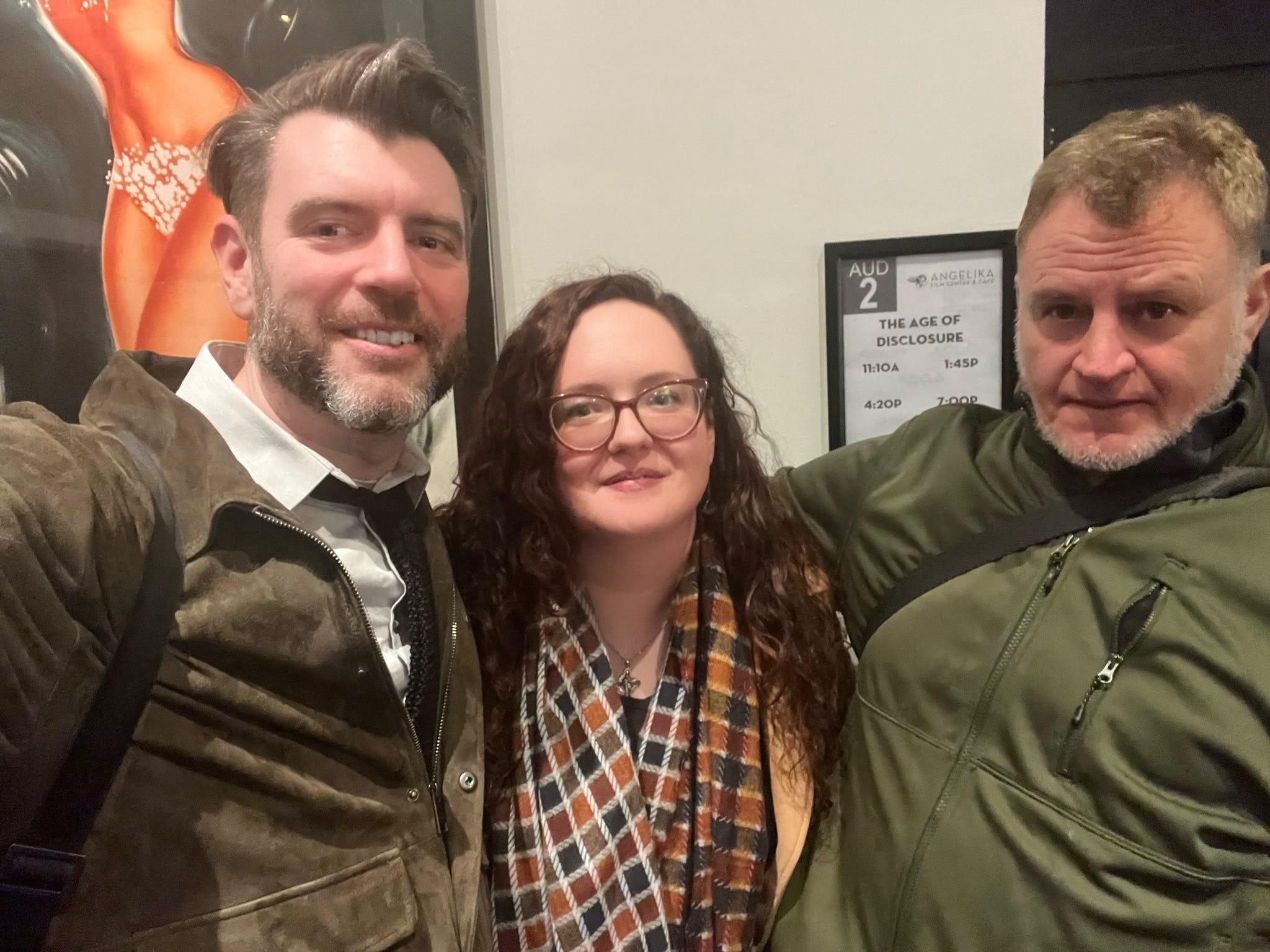
I don’t know about you guys, but since I went to the premiere of Age of Disclosure in NYC, I haven’t stopped puzzling over why they decided to go with AATIP over AAWSAP.
Anyone who has been even slightly paying attention can tell you that AATIP was never a formal, resourced Pentagon program. At best, it was a nickname used informally for a portfolio of tasks—which seemed to flow vaguely out of AAWSAP—that were never officially designated, funded, staffed, or tracked as a standalone program.
The whole debacle has created a haze of discord and doubt around what has become the foundational text of the disclosure movement, the 2017 New York Times article. And honestly, we should be bothered. Why would they get that wrong? And why would they continue to get it wrong even after we all know that it’s wrong?
I don’t know the answer to that.
But I will say that when the cornerstone narrative of a movement is built on an error that everyone quietly agrees to pretend isn’t an error (there is a not-so-subtle loyalty test in that) you are no longer in the realm of disclosure. You are in the realm of management. And that should give all of us pause.
Because if the point of disclosure is clarity, transparency, and a reckoning with the truth—then why are we watching institutions, whistleblowers, journalists, and insiders cling to a label that obscures more than it reveals? Why choose the myth over the memos? Why reinforce a narrative scaffolding that we know is structurally unsound?
This is not about pedantry. It’s about signal integrity.
When something as basic as the program name is handled sloppily, it forces us to ask uncomfortable but necessary questions: What else is being handled with this level of imprecision? What else is downstream from this error? And who benefits from maintaining the confusion?
So why are we still talking about AATIP?
Age of Disclosure didn’t break new ground in terms of information—and to be fair, no one really expected it to. The excitement was centered almost entirely around the sheer number of credentialed individuals willing to go on the record in the same place, at the same time. We really haven’t seen that since the heady, Halcyon days of TTSA’s unveiling in 2017.
But I’d argue that beneath these seemingly wholesome appeals to authority, over-reliance on credentialism functions as one of the quieter mechanisms of narrative control. Credentialism has become a kind of epistemic shortcut: a way of manufacturing confidence in narratives we have no way of confirming otherwise. If enough people with impressive résumés show up and say a thing, the thing is presumed solid—even if the underlying details remain vague, contradictory, or unverifiable. The performance of authority becomes a substitute for the substance of truth.
And this is where the AATIP problem becomes especially strange.
In Age of Disclosure, we are told repeatedly that many of the speakers were “members of AATIP.” But what does that even mean? How do you become a member of a program that never formally existed? And why invoke AATIP at all when so many of the people involved were actually connected to AAWSAP, the real, resourced program with contracts, documentation, and oversight?
And all of this is cloaked in the same tail-eating logic:
AATIP gains credibility because credentialed individuals say they were involved.
Those individuals gain additional credibility as UFO insiders because they are described as members of AATIP.
Their cumulative credibility is used to imply that AATIP was a real, structured program.
But AATIP’s existence is never demonstrated—only asserted by the same people whose authority depends on the assertion.
It’s a closed system, a narrative feedback loop. Nothing new is being revealed. The authority is the product.
And conveniently, you can plug anyone into this narrative that you’d like, because—once again—there is no way to prove whether someone was or was not involved in a program that didn’t exist. It would be hard to devise a better mechanism for both credibility and intelligence laundering—especially considering how invested a large segment of the community still is in socially enforcing the acceptance of the narrative, no matter how convoluted it becomes.
This is how narrative containers are built. Not through facts, but through consensus theatre—a choreography of experts whose presence is meant to imply solidity where the data itself remains ambiguous or contradictory.
And that’s the real red flag.
If the story being sold depends on credentialism rather than transparency, if it leans on the authority of titles rather than the clarity of evidence, then what we are witnessing is not disclosure. It is the careful management of perception under the guise of revelation.
And if this is what slips out in the open, what does it suggest about everything still unseen?
Maybe the real lesson here is that disclosure—if it ever comes—is not going to arrive neatly packaged by the same people and organizations that have spent decades mastering the art of narrative fog. Maybe the clarity we’re waiting for is not coming from above, but from the slow, collective realization that we have to interrogate every assumption, every acronym, every convenient story we’re handed.
Not because we’re cynics, but because we care deeply about the truth—and we’re paying attention.
Kelly, I’m so glad you started this Substack. I’ve been with you since the Rabbit Hole, through Cosmosis, now to Substack. You are a brilliant and nuanced thinker and presenter. But…I get lost sometimes. I’ll just own it and say I’m not good at hints. Sometimes I just need to hear things in plain language. AWWSAP vs AATIP? Please, just tell me why this is significant. I worked in government and swam in acronyms all the time. They changed constantly. They were often interchangeable. I’m not saying your distinction isn’t important - I just don’t fully understand what you’re driving at. And please know, I’m on board with your belief the military/IC angle in “disclosure” is being curated and we need to be incredibly discerning what we choose to entertain. Many of your X posts also have a vague, non-specific, ominous flavor too. I want to understand but I often don’t. Maybe I’m reading them too deeply? I just need a little more context. With great respect and admiration for all you do.
I love this whole dissection. Both in the original piece and in the comments/discussion. The willingness to challenge and listen and respond, all with respect and straightforwardness. Really appreciate the topic and the people. Have a great day everyone.